100+ units · Sample 5–7 business days · Production 7–10 business days after sample approval
Custom Window Boxes
Die-cut window packaging. Let the product show through on the shelf — for food, cosmetics, and retail.
Quick answer
Custom window boxes are packaging with a die-cut window sealed with transparent film (PET, compostable cellulose, or RPET). Available in folding carton, rigid, or corrugated. MOQ from 100 units, lead time 7–10 business days after sample approval.
MOQ
100 units
Sample
5–7 business days
Lead time
7–10 business days
Category
Boxes
Format
Window Boxes
Why order direct from XC Paperbox
Foshan factory
18,000 m² since 2018
FSC A000511
Certified paper sourcing
ISO 9001:2015
Quality management
1M+ boxes / year
Volume capacity
DDP to 50+ countries
No surprise customs
24-hour quote
Reply within 1 business day
Overview
What it is, and when to use it.
Custom window boxes are packaging with a die-cut window — an opening cut into the box and sealed with a transparent film (PET, compostable cellulose, or RPET). The window lets the consumer see the product through the packaging without opening the box, which increases retail sell-through for products where visual inspection drives the purchase decision. Window boxes are built across multiple formats: folding cartons (the most common, for retail shelf), rigid boxes (for premium gift sets), and corrugated mailers (for DTC unboxing). This page covers the window feature itself — window shapes, film materials, and the trade-offs between PET, compostable cellulose, and RPET. If you know the format you need, jump to Folding Cartons (with window), Rigid Boxes (with window), or Mailer Boxes (with window). We manufacture window boxes from 100 units, with white samples in 5–7 business days and printed samples in 7–10 days. Every project runs on a dedicated line in our 18,000 m² FSC-certified facility in Foshan, China. For a full buying guide to window box materials, cost, MOQ, and retail uses, read our Custom Window Box Buying Guide.
Best for
- Retail shelf visibility
- Food & bakery
- Cosmetics & skincare
- Specialty retail
- Premium gift sets
- Product inspection categories
Buyer's decision framework
When to choose window boxes
A window box is the right answer when visual inspection of the product drives the purchase decision — the consumer needs to see the product before buying. The window earns its cost premium through increased retail sell-through.
- 1
Does visual inspection drive the purchase?
Yes — window boxes are the format when the consumer needs to see the product. Food (color, freshness), cosmetics (color, texture), chocolate (shape, finish), and specialty retail (craftsmanship) all benefit. If the product is identical across competitors (commodity), the window adds less value.
- 2
Folding carton, rigid, or corrugated base?
Folding carton for retail shelf (most common, most economical). Rigid for premium gift sets (luxury positioning). Corrugated for DTC mailers (shipping protection + visual reveal). Choose based on the retail channel and the product price point.
- 3
PET, compostable cellulose, or RPET film?
PET for standard (most economical). Compostable cellulose for eco-positioned brands (supports sustainability claims). RPET for recycled-content claims. All three are food-safe. The film choice affects recyclability — compostable cellulose is the only one that is compostable.
- 4
What window shape and size?
Rectangular for standard (most economical). Circular or oval for cosmetics and food. Custom shapes (brand logo, product silhouette) for differentiation — adds die tooling cost. The window should be large enough to show the product clearly but small enough to preserve the brand print canvas.
This page
Window Box (Folding Carton)
Retail shelf, food, cosmetics
- Cost
- $$
- Lead
- 7–10 days
- MOQ
- 100
Alternative
Window Box (Rigid)
Premium gift sets, visual reveal
- Cost
- $$$
- Lead
- 7–10 days
- MOQ
- 50
Alternative
Window Box (Corrugated Mailer)
DTC unboxing, ship + reveal
- Cost
- $$$
- Lead
- 7–10 days
- MOQ
- 100
Applications
Common use cases
- Retail shelf visibility (food, bakery)
- Cosmetics & skincare
- Specialty retail (electronics, accessories)
- Premium gift sets (visual reveal)
- Chocolate & confectionery
- Consumer electronics accessories
- Toy & hobby retail
- Specialty food (pasta, sauce, spice)
Browse real styles
Explore Custom Window Box Styles
Browse real box styles, finishes and structures. Select a reference to request pricing for a similar custom design.
window-01
window-02
window-03
window-04
window-05
window-06
Materials
Board & paper options
- ●300–400 gsm SBS paperboard (folding carton variant)The standard for retail shelf window boxes. Solid bleached sulfate gives a premium white print surface. Ships flat, erects at the packing station.
- ●1200–1800 gsm greyboard (rigid variant)The structural core for premium window rigid boxes. 1.5–2.5mm greyboard wrapped in art or specialty paper, with a die-cut window on the lid or front panel.
- ●B-flute corrugated (mailer variant)The standard for DTC window mailers. 2.5–3.0mm B-flute with litho-lam wrap and die-cut window on the lid. Ships flat, erects at the packing station.
- ●PET window film (standard)The standard window film. Clear, food-safe, recyclable in some streams. Most economical. Common for retail shelf and food applications.
- ●Compostable cellulose window filmThe eco window film. Made from wood pulp cellulose, compostable in industrial facilities. Higher cost but supports sustainability claims. Common for eco-positioned brands.
- ●RPET window film (recycled PET)The recycled-content window film. Made from post-consumer recycled PET. Supports recycled-content claims without sacrificing clarity. Higher cost than virgin PET.
Printing & finishes
How it gets dressed
Printing
- Offset CMYKRecommended for 1,000+ units and full-color photographic artwork. Lowest per-unit cost at volume.
- Digital printRecommended for 100–1,000 unit runs. No plate setup, fast turnaround, ideal for market tests.
- Pantone spot colorsRecommended for brand-critical color matches (logo reds, brand blues) where CMYK cannot reproduce a corporate color.
- Metallic inksRecommended for shimmer effects without foil-stamp cost. Subtler than foil, good for backgrounds and patterns around the window.
- Litho-lamination (rigid & corrugated)Recommended for rigid and corrugated window boxes — the printed sheet wraps the entire box exterior including edges.
- Flexo print (corrugated)Recommended for high-volume corrugated window boxes (5,000+ units). Lower print quality but significantly lower cost.
Finishes
- Aqueous coating (eco, water-based)
- Matte or gloss lamination
- Foil stamping (gold, silver, rose gold, holographic)
- Embossing & debossing
- Spot UV on matte grounds
- PET window film (standard)
- Compostable cellulose window film
- RPET window film (recycled content)
Sizes
Standard sizes — and fully custom
| Label | W | D | H | Unit |
|---|---|---|---|---|
| Small (cosmetics) | 80 | 50 | 30 | mm |
| Medium (food) | 200 | 150 | 60 | mm |
| Large (gift set) | 300 | 220 | 80 | mm |
| XL (apparel) | 400 | 300 | 100 | mm |
| Custom | — | — | — | mm |
Ordering & pricing
MOQ, lead time, and what drives the unit cost.
Every box is custom — there is no flat price list. Here is what you need to plan around, and what we will confirm in your tailored quote within 24 hours.
MOQ & sampling
MOQ is 100 units per SKU for folding carton and corrugated window boxes, 50 units for rigid window boxes. We can run smaller quantities as a sample or pilot program — ask us.
Lead time
Standard lead time is 7–10 business days after sample approval. Folding carton window boxes run faster (7–10 days). Rigid and corrugated window boxes run 7–10 days. Air freight (5–7 days) and sea freight (28–35 days) are both available.
How to read pricing
Final pricing is confirmed in your tailored quote within 24 hours. We do not publish a flat price list because every window box is custom — but we will always show the unit cost at 100, 500, 1,000, 5,000, and 10,000 units so you can see the volume curve before committing.
What affects the unit cost
Seven factors that move the quote.
Base format
Folding carton adds a modest per-unit cost at 1,000 (most economical). Rigid adds a significant per-unit cost at 1,000 (premium). Corrugated mailer adds a meaningful per-unit cost at 1,000 (DTC ship).
Window film
PET standard (no additional cost). Compostable cellulose adds a small per-unit cost. RPET adds a modest per-unit cost.
Window shape
Rectangular standard (no additional tooling). Circular/oval adds a one-time die tooling cost. Custom shapes add a larger one-time die tooling cost, amortized into per-unit.
Number of windows
Single window standard. Each additional window adds a minimal per-unit cost and tooling cost.
Print method
Digital for 100–1,000 units. Offset for 1,000+ units. Pantone adds plate cost. Litho-lam for rigid and corrugated.
Finishes
Aqueous coating included. Matte/gloss lamination adds a small per-unit cost. Foil adds a modest per-unit cost. Spot UV adds a small per-unit cost.
Volume
Per-unit cost drops sharply from 100 → 500 → 1,000 units, then gradually to 10,000.
Related case studies
See how brands have used custom window boxes.
Real project
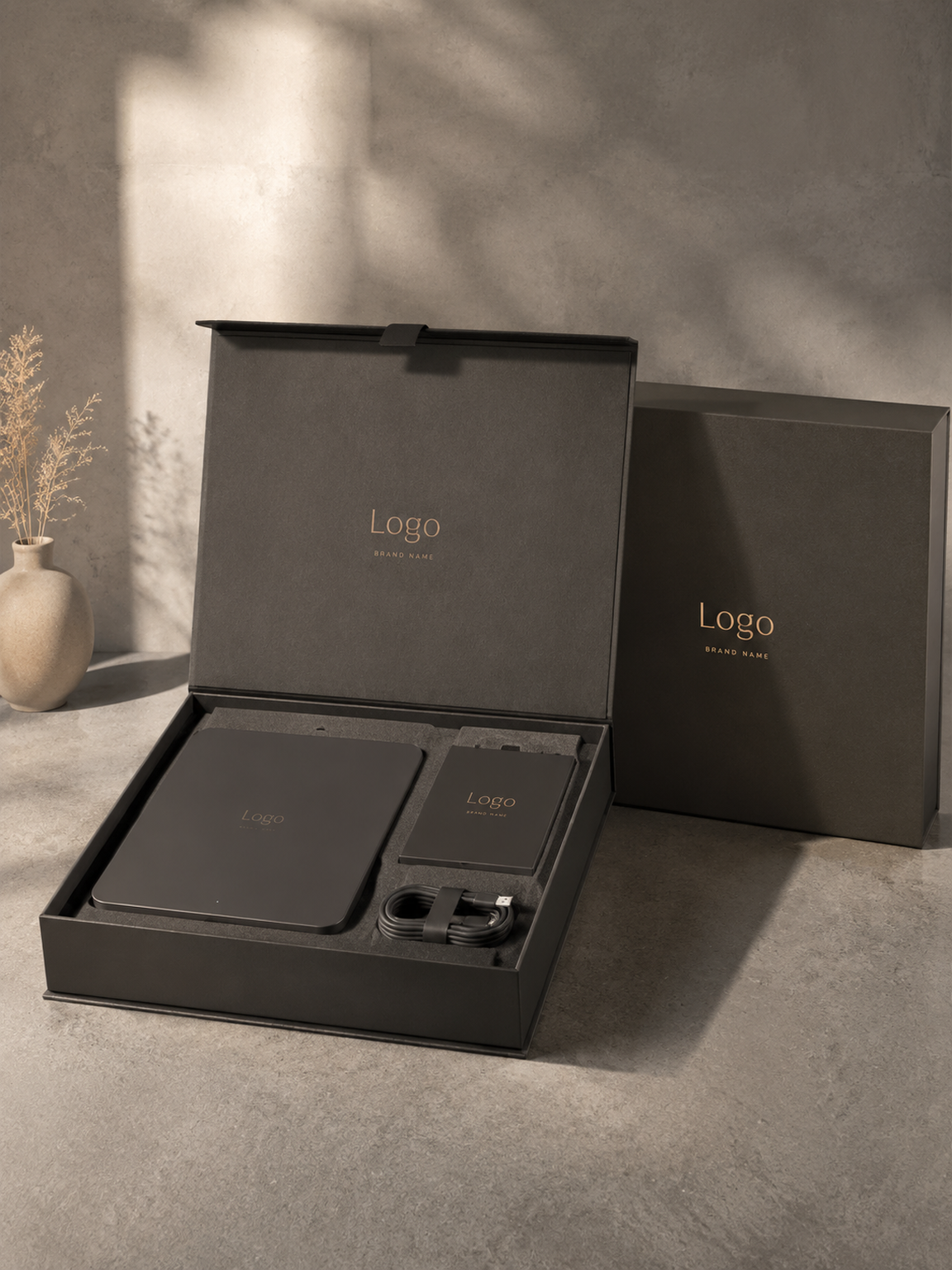
A bakery brand's retail launch
- Client
- Specialty bakery (representative example)
- Challenge
- A specialty bakery brand needed a retail shelf box for cookies that would let consumers see the cookies through the window, protect 12 cookies in transit, print a full-color brand pattern, and keep per-unit cost within a competitive per-unit budget at 5,000 units.
- Format chosen
- Folding carton window box in 350 gsm SBS, 200×150×60mm. Full-color CMYK print with aqueous coating. Rectangular die-cut window on front panel with PET film. Crash-lock bottom for fast erect at the bakery. Grease-resistant paperboard interior.
- Result
- The window let consumers see the cookies clearly on the shelf, increasing retail sell-through versus the previous closed box. The grease-resistant interior kept the box clean through the 14-day retail window. The format scaled from 1,000-unit launch to 5,000-unit steady state at a per-unit cost that met the brand's per-unit cost target.
100 units.
Our standard MOQ for custom window boxes is 100 units per SKU. At 100 units we use digital print. From 1,000 units, offset print becomes more economical per unit. The window die-cut adds a one-time tooling cost amortized into per-unit cost.
PET for standard, compostable cellulose for eco, RPET for recycled content.
PET is the standard window film — clear, food-safe, most economical. Compostable cellulose is the eco choice — wood pulp film, compostable in industrial facilities, supports sustainability claims, higher cost. RPET is the recycled-content choice — made from post-consumer recycled PET, supports recycled-content claims, higher cost than virgin PET. For food applications, all three are food-safe.
Any die-cut shape — rectangular, circular, custom.
Any shape that can be die-cut is available. Rectangular is the standard and most economical. Circular and oval are common for cosmetics and food. Custom shapes (brand logo, product silhouette) are available and add a one-time die tooling cost. The window can be on the front panel, lid, or multiple panels — each adds tooling and material cost.
Window boxes are product packaging with a window; display boxes are POP displays that hold multiple units.
Window boxes are individual product packaging with a die-cut window — the consumer sees the product inside the box on the shelf. Display boxes are POP (Point of Purchase) displays that hold multiple units of a product and act as a billboard — the display itself is the structure, not the product packaging. Window boxes are for individual products; display boxes are for multiple units.
Yes — 7–10 business days for a printed sample, 5–7 for a white sample.
We provide white samples (unprinted, exact construction) in 5–7 business days and printed samples (your artwork, finish, and color) in 7–10 business days. Sample fees are credited back against your production order. For window boxes, the white sample confirms the window shape, the film seal, and the product visibility — all critical to evaluate.
Yes — PET, compostable cellulose, and RPET window films are all food-safe.
All three window films (PET, compostable cellulose, RPET) are food-safe and FDA-compliant for direct food contact. For bakery, chocolate, and specialty food, the standard construction is SBS paperboard + PET window film. For eco-positioned food brands, choose compostable cellulose window film. The paperboard itself can be food-grade (grease-resistant) for direct food contact.
Depends on the film — PET and RPET require separation; compostable cellulose is compostable.
Window box recyclability depends on the film. PET and RPET window films are recyclable but require separation from the paper stream in many municipalities — the consumer must remove the film before recycling the paperboard. Compostable cellulose film is compostable in industrial facilities. For brands making a sustainability claim, choose compostable cellulose window film, FSC-certified paperboard, and water-based ink. We supply chain-of-custody documentation for all FSC-certified projects.
7–10 business days after sample approval.
Standard production runs 7–10 business days after sample approval. The window die-cutting adds a step but does not significantly extend the timeline. Folding carton window boxes run faster (7–10 days). Rigid and corrugated window boxes run 7–10 days. Air freight (5–7 days) and sea freight (28–35 days) are both available.
Request a quote
Tell us about your project.
Send a few details and we'll come back within 24 hours with a tailored quote, lead time estimate, and material recommendations.
- · Free dieline and 3D mockup
- · Sample fees credited against first order
- · DDP shipping to 50+ countries
Compare formats
Other box formats worth considering.
Custom Boxes
Custom Folding Cartons
Tuck-end and glued-sleeve cartons engineered for the retail shelf — lightweight, FDA-grade, fully recyclable, and the lowest unit cost in the box family.
See specs and pricingCustom Boxes
Custom Rigid Boxes
Heaviest board. Magnetic closures. The benchmark for premium.
See specs and pricingCustom Boxes
Custom Mailer Boxes
Corrugated roll-end tuck-front mailers engineered for the doorstep — branded inside and out, ship flat, and assemble in seconds.
See specs and pricing
Read before you order
Guides that pair with custom window boxes.
Packaging Guide · 12 min read
Rigid Boxes vs Folding Cartons: Which Packaging Solution Is Right for Your Brand?
Compare rigid boxes and folding cartons in terms of structure, cost, appearance, durability, MOQ, production time, and ideal applications to choose the right packaging solution for your brand.
Read guidePackaging Guide · 15 min read
The Complete Guide to Luxury Packaging
Everything you need to know about creating premium packaging that communicates luxury and justifies higher price points.
Read guidePackaging Guide · 14 min read
How to Choose the Right Paper Packaging Material
Compare art paper, kraft paper, coated paper, corrugated board, grey board, and recycled paper. Learn which material fits your brand, product, budget, and sustainability goals — with a practical decision framework and industry-specific recommendations.
Read guide
Ready to start?
Send us a sketch, reference, or sample. Quote back in 24 hours.
From 50 units · FSC-certified · DDP worldwide · Response in 24 hours
Response within 24 hours. No obligation quotation.
Or email info@xcpaperbox.com